It’s 5 a.m., the heat kicks on, and a loud BANG comes up through the floor. A minute later the pipes start knocking like someone is hitting them with a hammer. If your boiler is making noise like this, you’re not alone. Strange boiler sounds are one of the most common calls we get once the cold weather starts.
Continental Plumbers has worked on steam and hot water boilers in Elizabeth, Union, Cranford and the rest of Union County since 1985. In this guide we explain what each sound usually means, what you can safely check on your own, and which noises mean you should call a plumber right away.
First, Know Which Type of Boiler You Have
The same sound can mean different things in a steam boiler and a hot water boiler. Many older Union County homes built between the 1920s and the 1960s still run on steam. Newer systems, and many that were converted over the years, run on hot water.
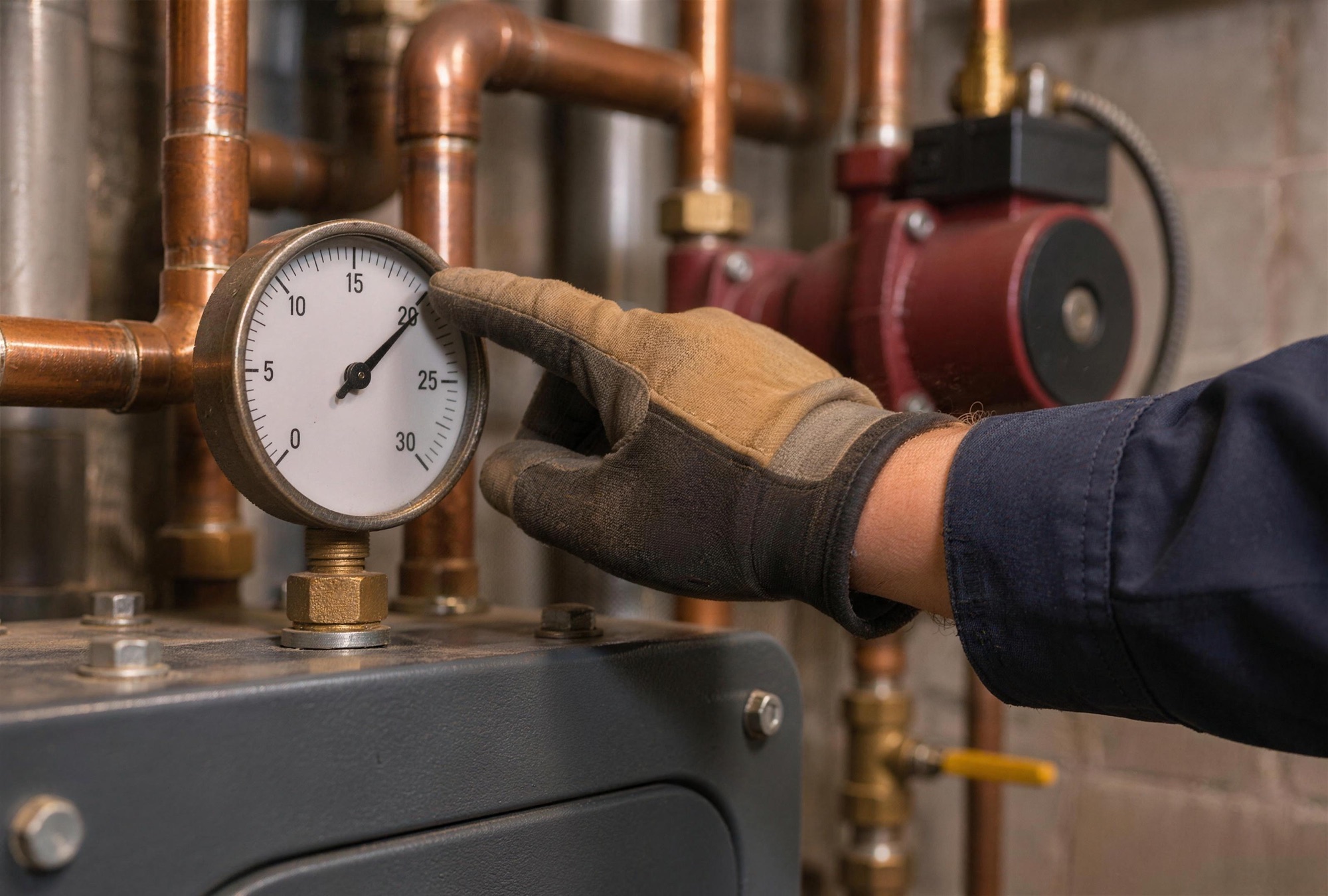
A quick way to tell: a steam boiler has a glass tube on the side (the sight glass) with water in it, and its gauge reads very low, usually under 2 PSI. A hot water boiler has a gauge that reads around 12 to 25 PSI and a pump (circulator) on the piping. If you’re not sure, our guide on steam vs. hot water boilers walks you through it.
Boiler Making Noise? What Each Sound Usually Means
Banging or knocking in the pipes
In a steam system, banging is usually “water hammer.” Steam hits a pocket of water that is trapped in a pipe or radiator, and the pipe jumps. Common causes are pipes that have sagged over the years, radiators that are not tilted back toward the valve, a radiator valve left half open, or a boiler that has too much water in it.
In a hot water system, knocking can come from air in the lines, a valve closing quickly, or pipes rubbing against wood as they heat up and expand. Light ticking when the heat comes on is often just expansion. Loud, sharp bangs are not.
Kettling: a rumbling, boiling sound
Kettling sounds like a tea kettle about to boil, or a low rumble inside the boiler. It happens in hot water boilers when scale and sludge build up on the heat exchanger. Water gets trapped against the hot metal, boils in small spots and makes noise. Low water flow, from a weak pump or a partly closed valve, can cause it too. Kettling makes the boiler work harder and can shorten its life, so it is worth having checked.
Whistling or hissing
On a steam radiator, a short hiss from the air vent when the heat comes on is normal. That is air leaving so steam can come in. A vent that keeps hissing, spits water or whistles loudly may be stuck or worn out.
On a hot water boiler, a high whistle often points to the same problem as kettling: restricted flow or buildup inside the boiler. Hissing near the boiler itself can also mean a small leak, so look for drips or damp spots.
Gurgling
Gurgling in a hot water system almost always means air in the pipes or radiators. You may also notice radiators that are warm at the bottom and cold at the top. Bleeding the radiators usually fixes it. In a steam system, gurgling near the boiler can mean the water level is too high or the water is dirty and foaming.
Humming, buzzing or a loud boom when it starts
A steady hum can be normal from the pump or burner fan. A loud buzz or grinding sound from the pump means it may be failing. A loud “whoomp” or boom when the burner lights is different: that can be delayed ignition, and it should be checked by a professional right away.
[PHOTO]
Caption: Banging pipes, kettling and whistling are your boiler’s way of telling you something needs attention.
What You Can Safely Check Yourself
Before you call, a few simple checks can tell you a lot. Only do what you feel comfortable with, and never open the boiler cabinet.
- Check the pressure gauge. On a hot water boiler it should read about 12 to 15 PSI when cold and up to about 25 PSI when hot. On a steam boiler it should stay low, usually under 2 PSI.
- Look at the sight glass (steam only). The water should sit about halfway up the glass while the boiler is running. Too high or too low can both cause noise. Don’t add water to a hot boiler that is very low; turn it off and call.
- Bleed your radiators (hot water only). With the heat off and the radiators cool, open the bleed valve with a radiator key until water comes out, then close it.
- Open steam radiator valves all the way. On a one-pipe steam radiator, the valve should be fully open or fully closed. Halfway open traps water and causes banging.
- Check the radiator tilt (steam only). A one-pipe steam radiator should lean slightly back toward the valve so water can drain out. A small shim under the far legs often stops the knocking.
If the noise comes with cold rooms, our guide on why a boiler is not heating covers the next things to look at.
When a Noisy Boiler Needs a Plumber Right Away
Some boiler noises are annoying. Others are a warning. Call a licensed plumber as soon as possible if you notice:
- A loud boom or bang when the burner lights
- The relief valve dripping, spraying or hissing
- Pressure on a hot water boiler above 30 PSI
- A steam boiler with no water showing in the sight glass
- Kettling or rumbling that keeps getting louder
- Water leaking around the boiler or under radiators
- Grinding or screeching from the pump
If you smell gas, leave the house right away and call your gas company or 911 from outside. If your carbon monoxide alarm goes off, get everyone out and call 911.
A noisy boiler that is also very old may be telling you something bigger. Here is how we help homeowners decide whether an old boiler can still be repaired.
Boiler Making Noise FAQ
Is it normal for a boiler to make some noise?
Yes. A soft click when it starts, a low hum from the burner or pump, and a short hiss from steam radiator vents are all normal. Loud banging, rumbling, whistling or grinding are not, and they usually get worse over time.
Why do my pipes bang only in the morning?
In a steam system, the first heating cycle of the day is when the pipes are coldest. More steam turns back into water, and that water gets hit by incoming steam. Sagging pipes or radiators tilted the wrong way make it worse.
Can a noisy boiler be dangerous?
Most noises are signs of wear, air or buildup, not immediate danger. But a boom on ignition, a leaking relief valve or very high pressure should be checked right away. When in doubt, turn the boiler off and call a plumber.
Get Your Noisy Boiler Checked
Continental Plumbers has provided trusted boiler repair in Union, NJ and across Union County since 1985 (NJ License #9142). We work on steam and hot water boilers in Elizabeth, Union, Hillside, Kenilworth, Roselle Park, Cranford, Linden and nearby towns, with same-day service available.
📞 Call (973) 900-0430 or learn more about our hot water boiler repair and steam boiler repair services.