You’re halfway through a shower when the hot water runs out. Again. Down in the basement, the water heater is making a rumbling, popping sound, like popcorn in a pot. In many homes, the cause is sediment at the bottom of the tank, and the fix is to flush your water heater. It’s simple maintenance that most people never do.
Continental Plumbers has installed and serviced water heaters in Elizabeth, Union and the rest of Union County since 1985. In this guide, you’ll learn how often to flush a water heater, the signs that yours needs it, how to do it safely, and when it’s better to let a plumber handle it.
Why You Need to Flush Your Water Heater
The water that comes into your home carries minerals like calcium and magnesium. When a tank water heater heats that water, some of those minerals settle out and sink to the bottom of the tank. Over the years, they build up into a layer of sediment.
That layer causes real problems:
- Less hot water. Sediment takes up space inside the tank, so it holds less hot water.
- Higher energy bills. On a gas water heater, the burner has to heat through the sediment before it heats the water. It runs longer to do the same job.
- Noise. Water trapped under the sediment boils and pops. That’s the rumbling you hear.
- A shorter life. Sediment makes the bottom of the tank run hotter, and that extra heat can wear out the tank faster. On electric heaters, it can burn out the lower heating element.
When you flush the water heater, you drain that sediment out before it hardens and causes damage.
How Often Should You Flush a Water Heater?
For most homes, once a year is the right schedule. Many water heater manufacturers recommend yearly flushing in the owner’s manual, so check yours for the exact advice for your model.
You may need to flush it more often if:
- Your home has hard water (white crust on faucets and shower heads is a clue).
- A big family uses a lot of hot water every day.
- You’ve already noticed rumbling or sandy water.
Have a tankless water heater? It doesn’t collect sediment the same way, but minerals can still build up inside the heat exchanger. Tankless units need a descaling flush, usually once a year. That’s done with a small pump and a cleaning solution, and it’s a good job to leave to a plumber.
Signs Your Water Heater Needs a Flush
Even if you don’t know when your water heater was last flushed, it will usually tell you. Watch for:
- Rumbling, popping or crackling sounds when the heater runs.
- Hot water that runs out faster than it used to.
- Cloudy, rusty or sandy water from the hot taps.
- Small bits of grit in faucet aerators or shower heads.
- Hot water that takes longer to come back after someone showers.
Rusty water and a leak at the bottom of the tank are different stories. Those can mean the tank itself is failing. Our guide on the signs your water heater needs replacing, not repairing explains how to tell the difference.
How to Flush a Tank Water Heater, Step by Step
Read your owner’s manual first, because every model is a little different. In general, the steps for a gas or electric tank water heater are:
- Turn off the heat source. On a gas heater, set the control to “pilot” or “vacation.” On an electric heater, switch off the breaker. This step is critical on electric heaters: heating elements burn out fast if they turn on in an empty tank.
- Shut off the cold water supply. Close the valve on the cold water pipe at the top of the heater.
- Let the water cool. Wait a few hours, or let it run until the water is warm, not hot. Tank water can scald you.
- Connect a garden hose to the drain valve near the bottom of the tank. Run the other end to a floor drain, a utility sink or outside, lower than the valve.
- Open a hot water faucet upstairs. This lets air in so the tank drains smoothly.
- Open the drain valve and let the tank empty. The first water out is often cloudy or full of grit.
- Stir up the rest. With the drain still open, turn the cold water supply on for a minute, then off again. Repeat until the water runs clear.
- Close the drain valve, remove the hose and turn the cold water supply back on.
- Refill completely. Leave the hot faucet open until water flows from it in a steady stream with no sputtering air. Now the tank is full.
- Turn the heat source back on and check the drain valve for drips.
[PHOTO]
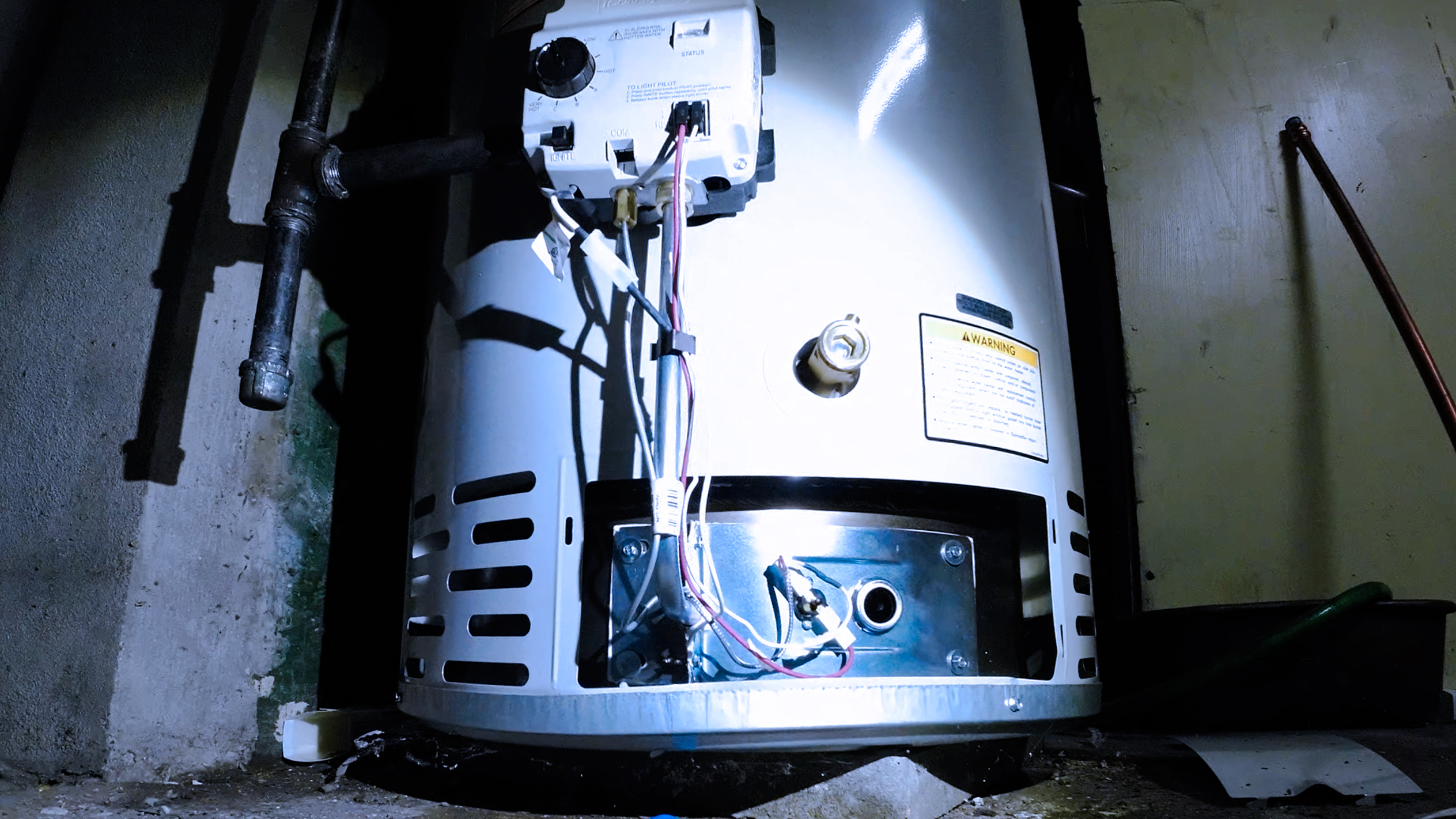
Caption: Flushing a tank water heater drains out the sediment that settles at the bottom, so the heater works less and lasts longer.
When to Let a Plumber Flush Your Water Heater
Flushing is simple on a newer heater. On an older one, it can create new problems. Many homes in Union County have water heaters tucked into old basements, and we often find heaters that haven’t been flushed in 10 years or more. Call a plumber instead of doing it yourself if:
- The heater has never been flushed and is more than 8 to 10 years old. Hardened sediment can clog the drain valve, and an old plastic valve may not close again once you open it.
- The drain valve is leaking, stuck or cracked.
- Water barely trickles out of the drain, even with the hot faucet open.
- The rumbling doesn’t stop after a flush.
- You see water around the base of the tank.
- You have a tankless unit that needs descaling.
- You smell gas, or the pilot won’t stay lit after the flush.
During a maintenance visit, a plumber can also check the anode rod (the metal rod that protects the tank from rust), test the temperature and pressure relief valve, and look at the venting on gas heaters. If something is already broken, we offer water heater repair in Union, NJ as well.
Flushing pairs well with other seasonal checks. Our fall plumbing checklist for NJ homeowners covers the rest.
Water Heater Flushing FAQ
What happens if you never flush your water heater?
Sediment keeps building up at the bottom of the tank. Over time, you get less hot water, higher energy bills and more noise. It can also shorten the life of the water heater.
How long does it take to flush a water heater?
The flush itself usually takes about 30 minutes to an hour. Add a few hours if you let the water cool first. Plan to do it when nobody needs hot water.
Is it too late to flush an old water heater?
Not always, but it’s riskier. On a heater that has never been flushed, hard sediment can block the drain valve or keep it from sealing. Have a plumber check it first.
Need Water Heater Maintenance? We Can Help
Continental Plumbers has provided trusted plumbing and heating service in Union County since 1985 (NJ License #9142). We flush, repair and replace gas and electric water heaters in Elizabeth, Union, Cranford, Linden, Roselle and nearby towns, with same-day service available.
📞 Call (973) 900-0430 or learn more about our water heater maintenance in Union County, NJ.