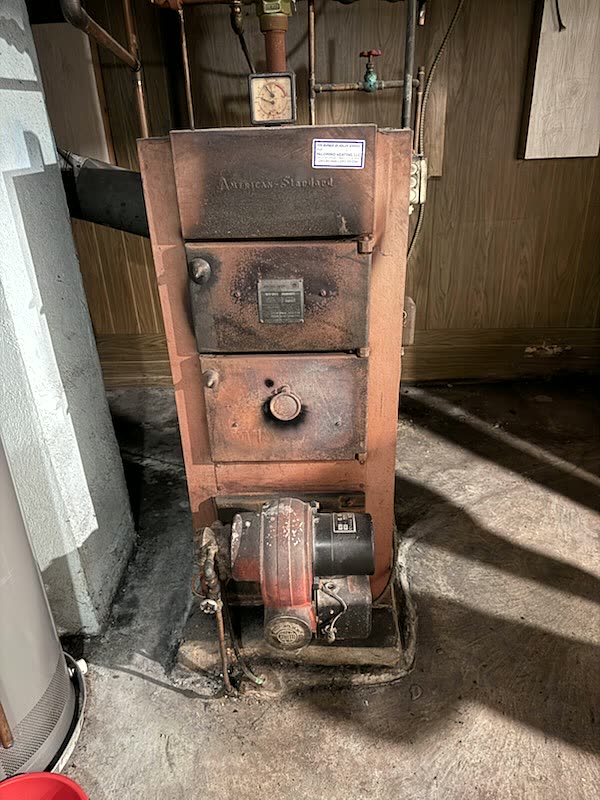
“It’s still running. Can’t you just fix it?” We hear that question a lot, usually in a basement in Elizabeth or Union, standing in front of a big cast iron boiler that has been heating the house for 30, 40 or even 60 years. These old boilers were built to last, and many of them did. But at some point, keeping one alive gets harder, more expensive and less safe than most homeowners expect.
Continental Plumbers has worked on boilers in Union County since 1985, including plenty of units older than our company. Here’s an honest look at old boiler repair: what we can still fix, why some repairs just aren’t possible anymore, and how to tell when it’s time to stop repairing and start planning a replacement.
Why Old Boilers Are So Hard to Repair
The problem usually isn’t the skill of the technician. It’s the boiler itself. These are the reasons we run into most often:
- Parts are no longer made. Many boilers installed in the 1960s, 70s and 80s came from manufacturers that have closed, merged or stopped supporting those models years ago. Gas valves, burners, controls and specific gaskets can be impossible to find. Sometimes a used or “universal” part can be adapted, but that’s a patch, not a proper repair.
- Cracked cast iron sections. Cast iron boilers are built from sections joined together. After decades of heating up and cooling down, a section can crack. Water on the basement floor, a boiler that keeps losing water or pressure, or a steam boiler that needs water added all the time are common signs. On most old boilers, a cracked section can’t be safely repaired.
- Rust and corrosion inside. Years of minerals, sludge and rust build up inside the boiler and the pipes. Heat doesn’t transfer well, the burner works harder and parts fail more often.
- Outdated safety controls. Older boilers often have standing pilots, old-style controls and, on steam systems, low-water cutoffs that are worn out or missing. Today’s codes and safety standards expect more. Sometimes a repair means bringing several controls up to date, which adds up fast.
- Venting and chimney problems. An old boiler often vents into an old chimney with a worn liner. If the venting doesn’t work right, combustion gases, including carbon monoxide, can end up in the house.
- Converted coal boilers. Some of the oldest homes in our area still have huge boilers that were originally built for coal and later converted to oil or gas. They’re usually far bigger than the house needs and waste a lot of fuel.
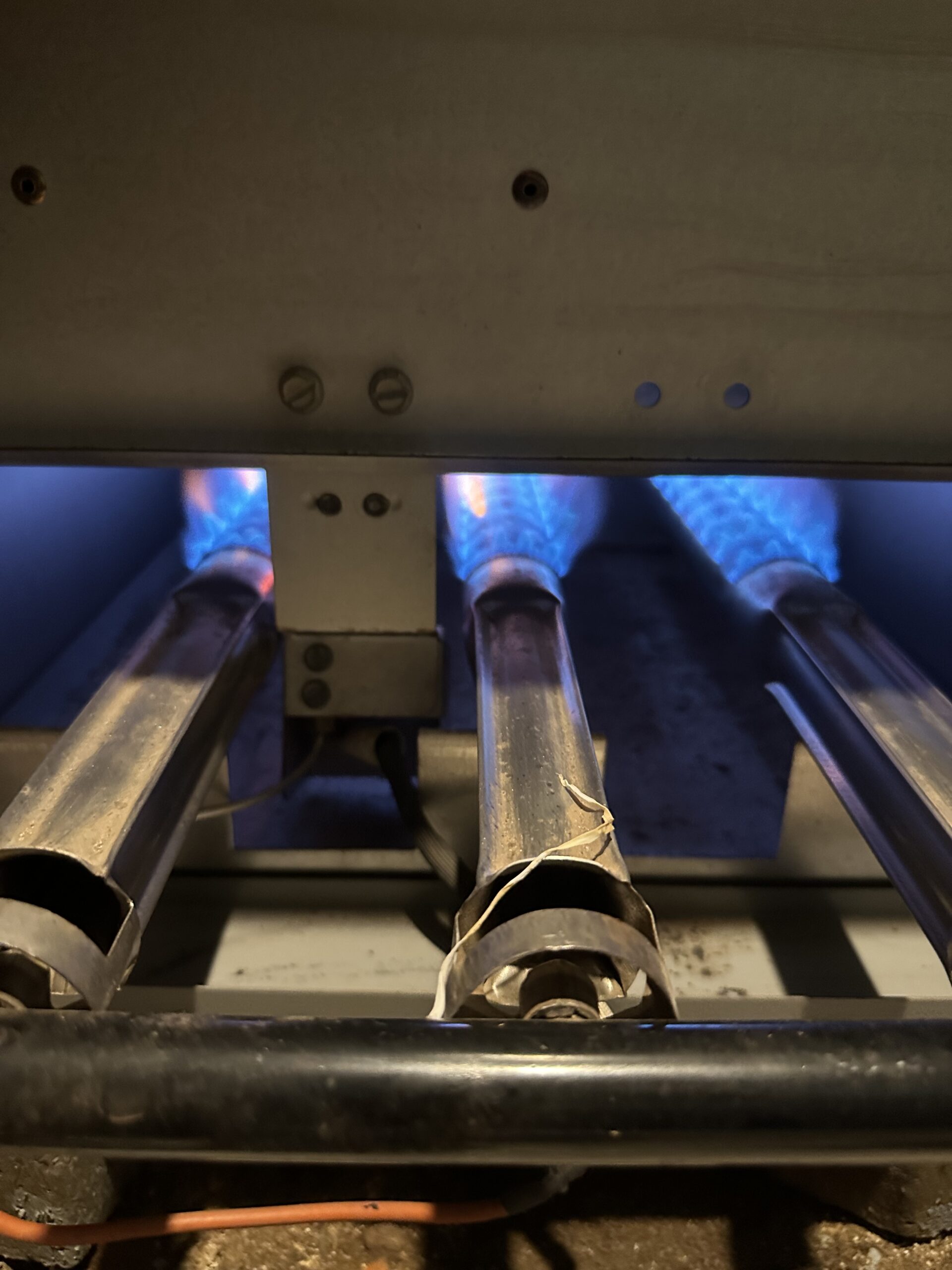
[PHOTO: old-boiler-rusted-burner-chamber-nj.jpg]
Caption: A real job from our crew: the burners pulled out of an old gas boiler for cleaning. Look at the combustion chamber: heavy rust and insulation that is falling apart. Cleaning helps, but at this stage the real question is how much longer the boiler can safely run.
What Can Still Be Repaired on an Old Boiler
Old doesn’t always mean “replace it today.” If the boiler itself (the cast iron body, or “heat exchanger”) is in good shape, many common problems can still be fixed, as long as the parts are available:
- Thermostats and some wiring problems
- Circulator pumps on hot water systems
- Pressure relief valves and expansion tanks
- Zone valves
- Thermocouples, igniters and some burner parts
- Low-water cutoffs and water feeders on steam boilers
- Leaking valves and pipes around the boiler
When we come out, we’ll tell you plainly whether your problem is one of these smaller repairs or a sign the boiler is reaching the end. If you’re not sure what kind of system you have, our guide on steam vs. hot water boilers will help you tell.
When Repairing an Old Boiler Stops Making Sense
Here’s a simple rule many heating pros use: if the boiler is more than 20-25 years old and the repair costs about half of what a new boiler would, replacement is usually the better choice. You’d be putting a lot of money into equipment that will likely need another expensive repair soon.
Other signs it’s time to plan a replacement:
- The part you need is discontinued, or only available used
- Water is leaking from the boiler body itself, not from a valve or fitting
- You’ve needed two or more repair calls in the last couple of heating seasons
- Some rooms never get warm, even after the system is bled and serviced
- Your heating bills keep going up while you use the heat the same way
- You see soot, smell fumes or your carbon monoxide detector goes off
- The boiler is short on safety controls that newer systems have as standard
Smell gas or have a carbon monoxide alarm? Get everyone out of the house first, then call your gas utility or 911 from outside. Don’t try to reset or restart the boiler.
A Note About Old Insulation
Many boilers and heating pipes in homes built before the 1980s were wrapped in insulation that may contain asbestos (often a white or gray chalky wrap or plaster-like coating). It’s usually not a danger if it’s intact and left alone, but it should never be cut, scraped or broken during a repair. If your boiler or pipes have this kind of insulation and it’s damaged, it should be tested and handled by a licensed professional before work is done. Let us know about it when you call, and we’ll plan the job around it.
Why Replacing an Old Boiler Pays Off
Replacing a boiler is a big decision, but for very old units the benefits are real:
- Lower heating bills. Many old boilers lose a large share of their fuel up the chimney. Modern boilers turn much more of your gas into heat. You can see how efficiency levels compare on our hot water boiler replacement page.
- The right size for your home. Old boilers, especially converted coal units, are often oversized. A new boiler sized to your home’s actual heating needs runs more efficiently and more evenly.
- Modern safety controls. New boilers come with up-to-date safety features and better venting.
- Reliability. Fewer surprise breakdowns, parts that are easy to get and a manufacturer warranty.
- Possible rebates. Depending on the equipment, high-efficiency boilers may qualify for NJ Clean Energy incentives. We’ll talk through your options.
Have a steam system? You don’t have to tear out your radiators. In most older Union County homes, the best option is replacing the old steam boiler with a new steam boiler and keeping the existing pipes and radiators. Learn more on our steam boiler replacement page.
Don’t Wait for the Coldest Night of the Year
An old boiler rarely fails on a mild day. It fails when it’s working hardest, usually during the first deep freeze, which is also when every heating company is busiest. If your boiler is old and has given you warning signs, it’s smarter to have it evaluated now and plan a replacement on your schedule, instead of waiting for a no-heat emergency.
A house without heat in January also puts your pipes at risk. See our guide on how to prevent frozen pipes. And if your boiler is acting up right now, start with our checklist for a boiler that’s not heating.
Old Boiler Repair FAQ
How long does a boiler last?
A well-maintained cast iron boiler often lasts 20-35 years, and some last much longer. Steel and some high-efficiency boilers typically have shorter lifespans. Age alone doesn’t mean it must be replaced, but after 25 years it’s worth planning ahead.
My boiler is 40 years old and still works. Should I replace it?
Not necessarily today. But have it inspected, test your carbon monoxide detectors and start planning. If a major part fails, it may not be repairable, and you don’t want to make that decision in the middle of winter.
Can you repair a cracked boiler section?
On most old cast iron boilers, no. Sealants and patches are only a temporary fix at best. In almost every case, a cracked section means the boiler needs to be replaced.
Is it worth repairing an old boiler just to get through the winter?
Sometimes, yes. If the repair is small and the part is available, a repair can buy you time to plan a replacement for spring or summer. We’ll tell you honestly if a repair is a good short-term choice or just money spent on a boiler that’s about to fail.
Old Boiler? Get an Honest Opinion
Continental Plumbers has provided trusted heating service in Union County since 1985 (NJ License #9142). We handle boiler repair in Union, NJ and nearby towns, and when repair no longer makes sense, we replace steam and hot water boilers in Elizabeth, Union, Hillside, Kenilworth, Roselle Park and the surrounding area. We’ll look at your boiler and tell you straight: repair it, or replace it.
📞 Call (973) 900-0430 or learn more about steam boiler replacement and hot water boiler replacement.