You’re making coffee when you look up and see it: a brown ring on the kitchen ceiling that wasn’t there last month. Or maybe it’s a damp patch on the wall, and the paint is starting to bubble. A water stain on the ceiling or wall almost always means water is getting somewhere it shouldn’t. Very often, the cause is a leaking pipe hidden above your head.
Continental Plumbers has been finding and fixing hidden leaks in Elizabeth, Union and the rest of Union County since 1985. In this guide, you’ll learn what usually causes a ceiling or wall stain, how to tell if it’s a plumbing leak, what to do right now, and when it’s time to call a plumber.
What Causes a Water Stain on the Ceiling?
Start by asking one simple question: what is directly above the stain? The answer usually points to the cause.
- A bathroom. This is the most common case. A stain on the kitchen or living room ceiling right under a bathroom often comes from a worn toilet wax ring, a leaking tub or shower drain, cracked grout, or a loose supply line.
- A water supply pipe. Copper and galvanized pipes run through ceilings and walls. Old joints, pinhole leaks and corrosion can let water drip slowly for weeks before you see a stain.
- A radiator or heating pipe. In older homes with steam or hot water heat, a leaking radiator valve or heating pipe can stain the ceiling below. These leaks often show up only when the heat is on.
- Sweating pipes. Cold water pipes can collect condensation in humid weather. The drips look like a leak, but the pipe itself is fine.
- The roof. A stain on a top-floor ceiling that grows after rain or melting snow is often a roof problem, not a plumbing one.
Many homes in Union County were built between the 1920s and the 1960s. After decades of use, their original pipes, drains and fittings are some of the most common sources of hidden leaks we see.
How to Tell If It’s a Leaking Pipe
Before you open a ceiling or wall, look for clues. They can tell you a lot about where the water is coming from:
- The stain gets worse after someone showers or flushes. That points to a drain, a toilet seal or the shower itself. The leak happens only when water goes down.
- The stain stays wet or keeps growing, even when nobody uses water. That points to a supply pipe. Supply lines are always under pressure, so they leak all the time.
- The stain appears after rain. That points to the roof, flashing or gutters.
- It shows up when the heat runs. That points to your heating system.
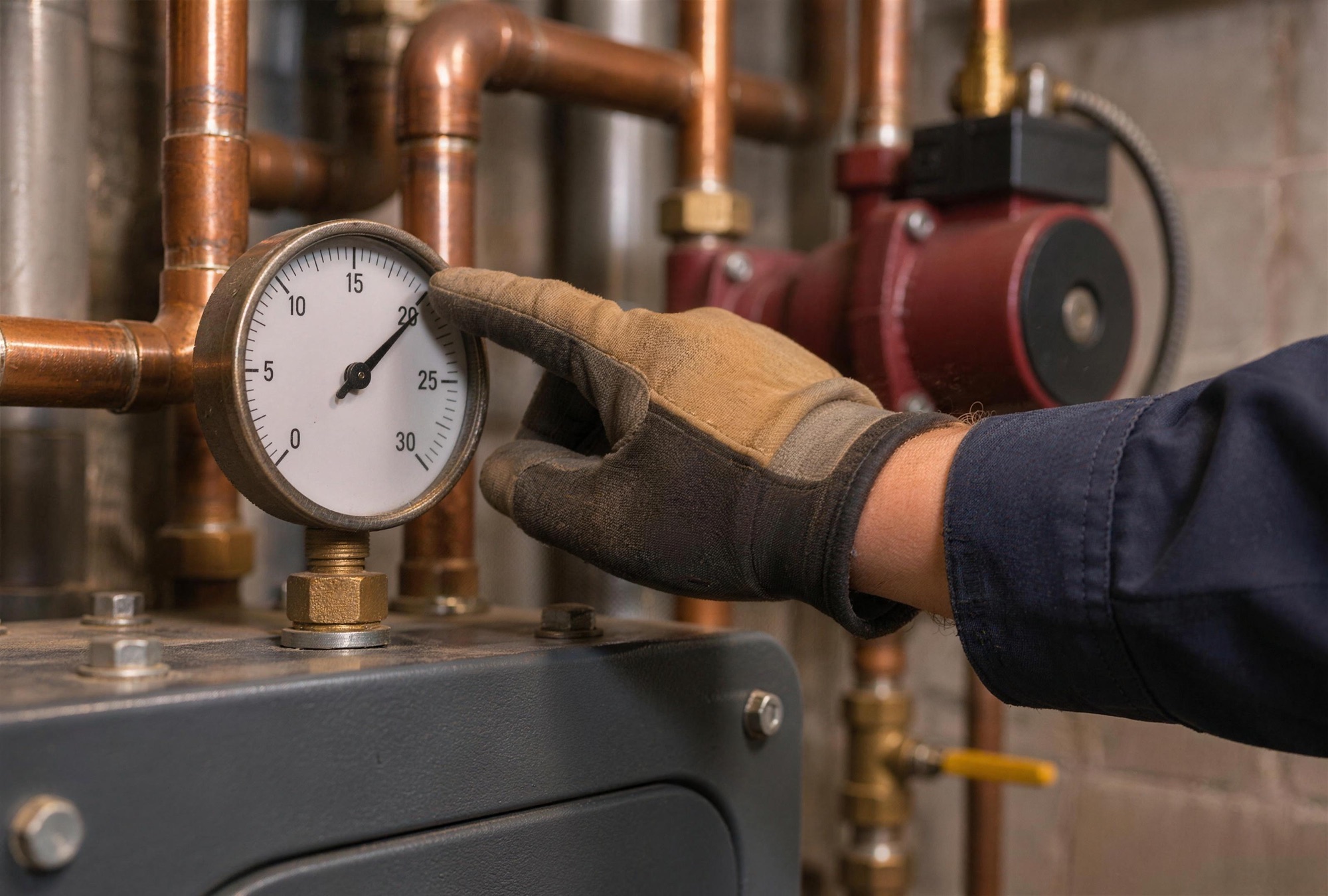
Try the water meter test. Turn off every faucet, appliance and fixture in the house. Then look at your water meter. If the numbers or the small leak indicator keep moving, water is escaping somewhere, and a hidden supply leak is likely.
[PHOTO]
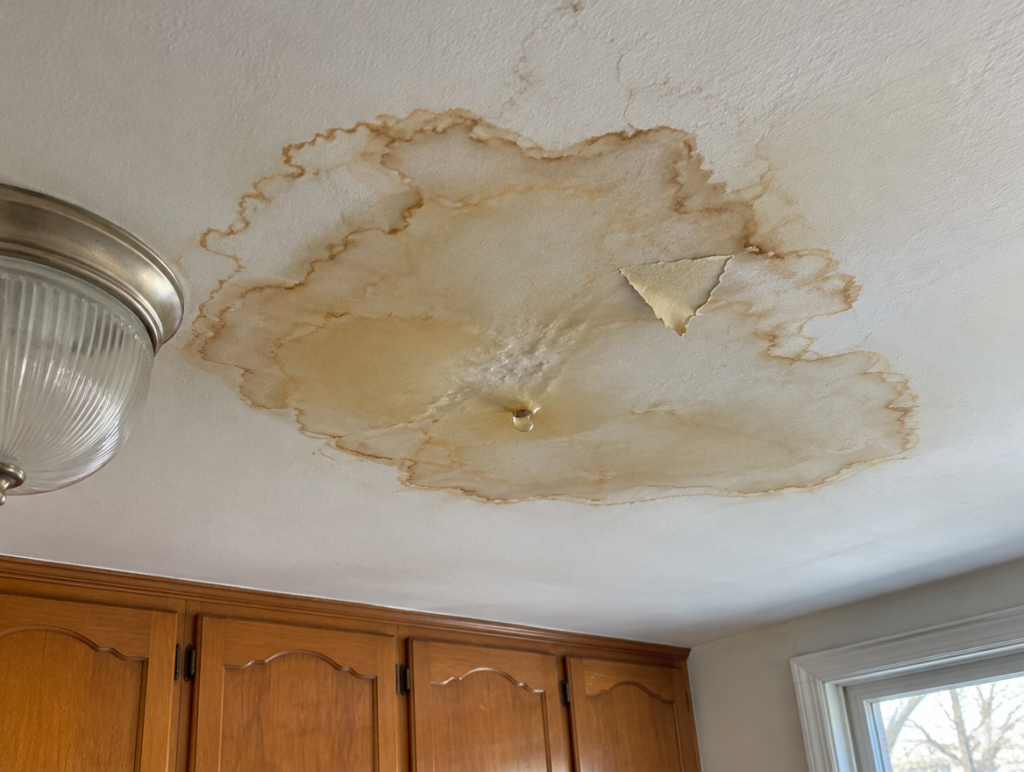
Caption: A brown ring on the ceiling under a bathroom is one of the most common signs of a leaking pipe, drain or toilet seal.
What to Do Right Now if Your Ceiling Is Leaking
If water is actively dripping, act fast. A small leak can become a big repair the longer it runs.
- Stop using the fixture above the stain. Don’t flush the toilet or use the shower or tub until the source is found.
- Shut off the water. If the drip doesn’t stop, close the main shut-off valve. In most Union County homes, it’s in the basement where the water line comes through the wall.
- Stay away from wet electrical fixtures. If water is near a ceiling light or outlet, turn off that circuit at the breaker panel.
- Protect your things. Move furniture and electronics, and put a bucket and towels under the drip.
- Watch for a bulging ceiling. A sagging or bulging spot means water is pooling above the drywall. Keep people out from under it and call for help right away.
- Take photos. Pictures of the stain and any damage can help with your insurance claim.
For more steps when water is coming in fast, see our guide on what to do in the first 10 minutes of a plumbing emergency.
Why You Shouldn’t Just Paint Over a Water Stain
It’s tempting to cover the stain with paint and forget about it. But the stain is only what you can see. Above the ceiling, the water may still be soaking into wood joists, insulation and drywall.
Hidden leaks can lead to:
- Mold. Mold can start to grow on wet materials within a day or two.
- Rotted wood. Joists and subfloors under a leaking bathroom can soften over time.
- A falling ceiling. Wet drywall gets heavy and can give way.
- Higher water bills. A supply leak runs day and night.
Fix the leak first. Then let everything dry out before you repair and repaint the ceiling.
When to Call a Plumber About a Ceiling or Wall Leak
Call a licensed plumber if:
- The stain is under a bathroom, kitchen or laundry room.
- The stain keeps growing or feels damp to the touch.
- Your water meter moves when everything is off.
- Paint is bubbling, peeling or cracking on a wall or ceiling.
- You smell a musty odor or see signs of mold.
- Your water bill went up and you can’t explain why.
- Water is dripping through a light fixture or the ceiling is sagging.
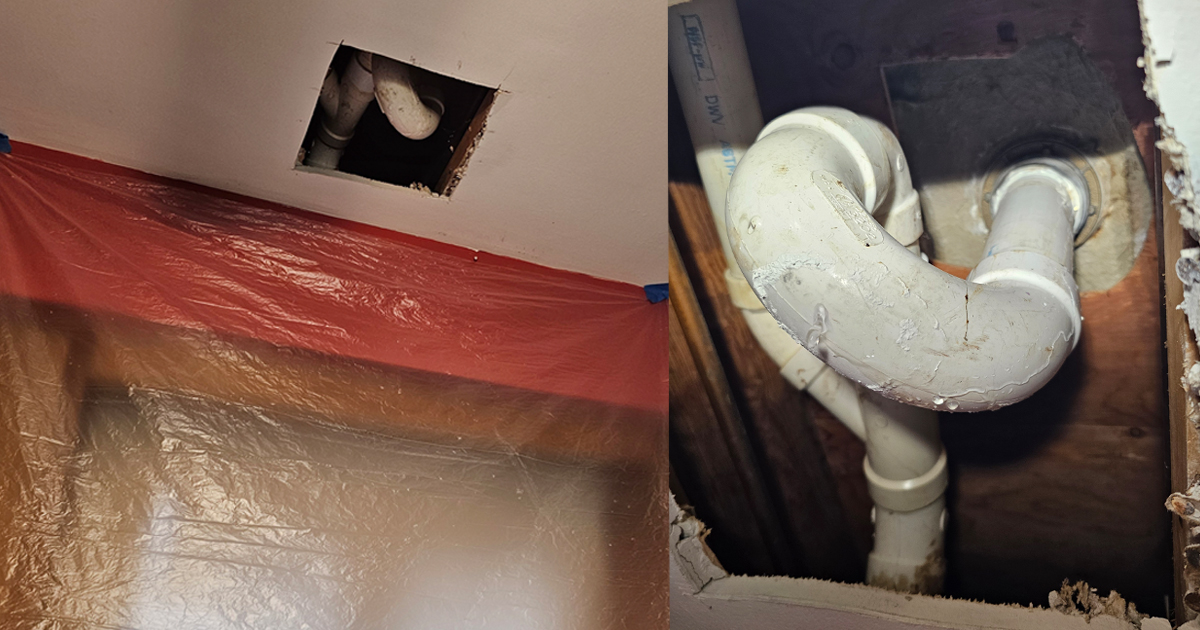
The hardest part of a hidden leak is finding it. Water can travel along a pipe or joist and show up several feet away from the real source. That’s why our team uses water leak detection in Union, NJ with acoustic listening equipment, thermal imaging, moisture meters and pressure testing. Finding the exact spot first means we usually open a small section of drywall instead of tearing out the whole ceiling.
If the leak comes from the bathroom above, we also handle bathroom plumbing repairs like toilet seals, shower drains and valves. A rusty, dripping valve behind the toilet is a common culprit, too. Our post on why your toilet shut-off valve gets rusty explains what to look for. And if the stain only shows up when the heat is on, a radiator repair may be what you need.
Ceiling Water Stain FAQ
Can a water stain on the ceiling be from condensation?
Yes. Cold water pipes and air conditioning lines can sweat in humid weather and drip onto the ceiling. If the stain shows up mostly in summer and dries in winter, condensation may be the cause. A plumber can tell you for sure.
Does an old water stain mean there is still a leak?
Not always. The leak may have been fixed and the stain left behind. Press on the spot. If it’s dry and firm and doesn’t grow over a few weeks, the leak is probably gone. If it’s soft, damp or getting bigger, the leak is still active.
Is a leaking pipe in the ceiling an emergency?
It is if water is dripping, the ceiling is sagging or water is near electrical fixtures. Shut off the water and call a plumber right away. Continental Plumbers offers 24/7 emergency service across Union County.
Water Stain on Your Ceiling? We Can Find the Leak
Continental Plumbers has provided trusted plumbing and heating service in Union County since 1985 (NJ License #9142). We find and fix hidden leaks in ceilings, walls and floors in Elizabeth, Union, Hillside, Linden, Roselle, Cranford and nearby towns, with 24/7 emergency service.
📞 Call (973) 900-0430 or learn more about our water leak detection services.